
At GAZ Energy, part of the Bochemie Group, we have long been used to a relatively straightforward scenario. We manufacture a product, perform the final inspection, carefully package everything the product leaves the factory and begins operating at the customer's site.
However, with the arrival of large-scale Battery Energy Storage Systems (BESS), the story continues long after the truck passes through the factory gate. And this is exactly where a discipline that is becoming increasingly common in the energy sector begins — commissioning.
We may witness the moment when the final inspection records its last “OK”, or the moment when our logistics colleagues position a 43-ton battery container onto a trailer with millimeter precision. This is followed by several signatures, document checks, and our technology is finally cleared for departure.
For many, this symbolically marks the end of the project and a reason for a small celebration. But for the commissioning team, everything is only just beginning.
What Does Commissioning Actually Mean?
In one sentence, commissioning could be described as the comprehensive process of putting technology into operation. In reality, however, it is much more than simply “switching on equipment.”
It is a combination of:
- technical preparation,
- coordination of multiple disciplines,
- safety verification,
- system configuration,
- communication with the customer,
- and often the ability to improvise in conditions far removed from office comfort.
Even before the technology leaves production, intensive planning takes place. Communication is maintained with customers, freight companies, and local contractors. Site readiness and the continuity of individual activities are carefully checked.
The following must be prepared on-site:
- concrete foundations with the required levelness,
- cable routes and conduits,
- grounding systems,
- connection points,
- handling areas,
- and dozens of other details.
Every small mistake eventually comes back like a boomerang. A missing conduit or an inaccuracy in the foundations can result in repeated excavation work, concrete grinding, or several days of delay for the entire installation.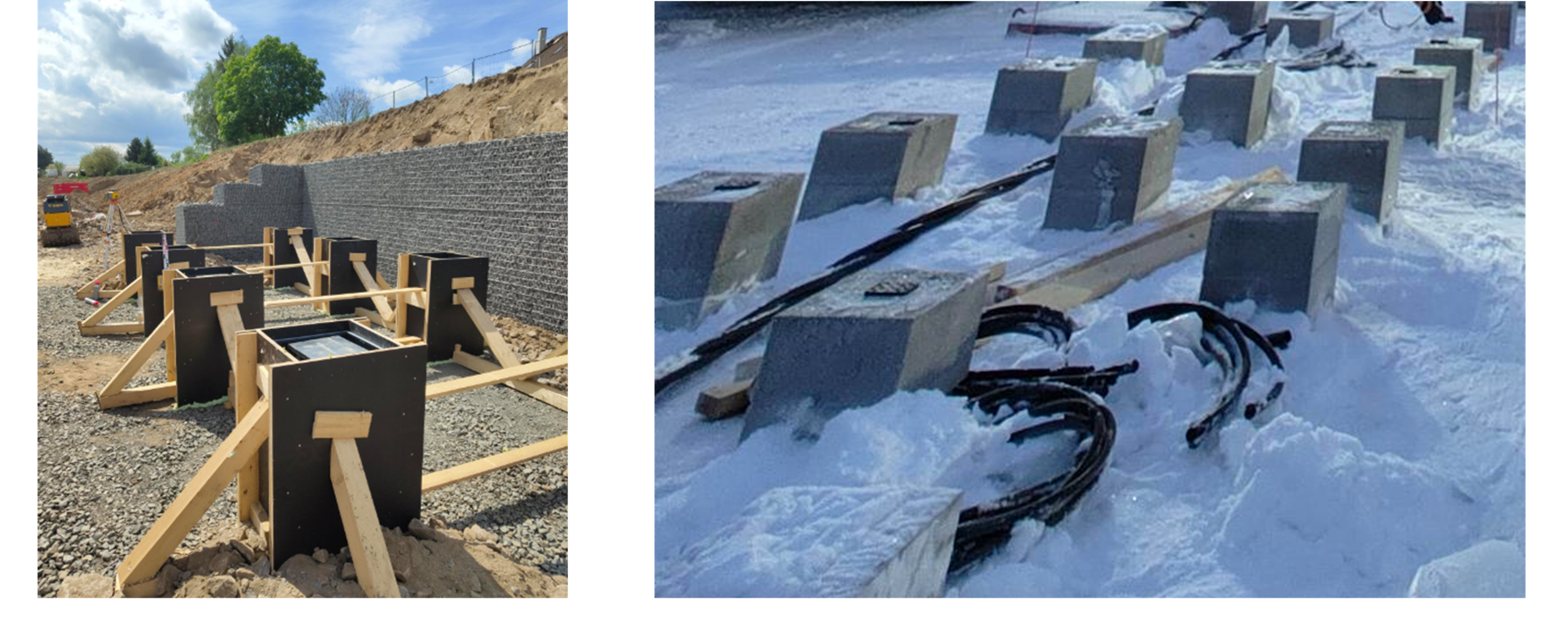
Technology Delivery
After weeks of preparation, another important moment arrives — delivery of the technology to the construction site.
Massive cranes with lifting capacities exceeding 220 tons gradually lift the battery containers from the trailers and place them onto the prepared foundations. At first glance, the process may appear surprisingly calm and simple. In reality, however, it is often far more dynamic.
Suddenly, a loud acoustic warning sounds and work stops. The crane system reports critical loading and a risk of instability. Yet an experienced operator only needs to make a slight adjustment to the boom geometry, and within minutes everything continues smoothly.
These are the moments when the experience of well-coordinated teams becomes evident Crane crews work with Swiss-watch precision, and shortly after the battery containers, inverters, switchboards, and transformers also begin floating above the construction site.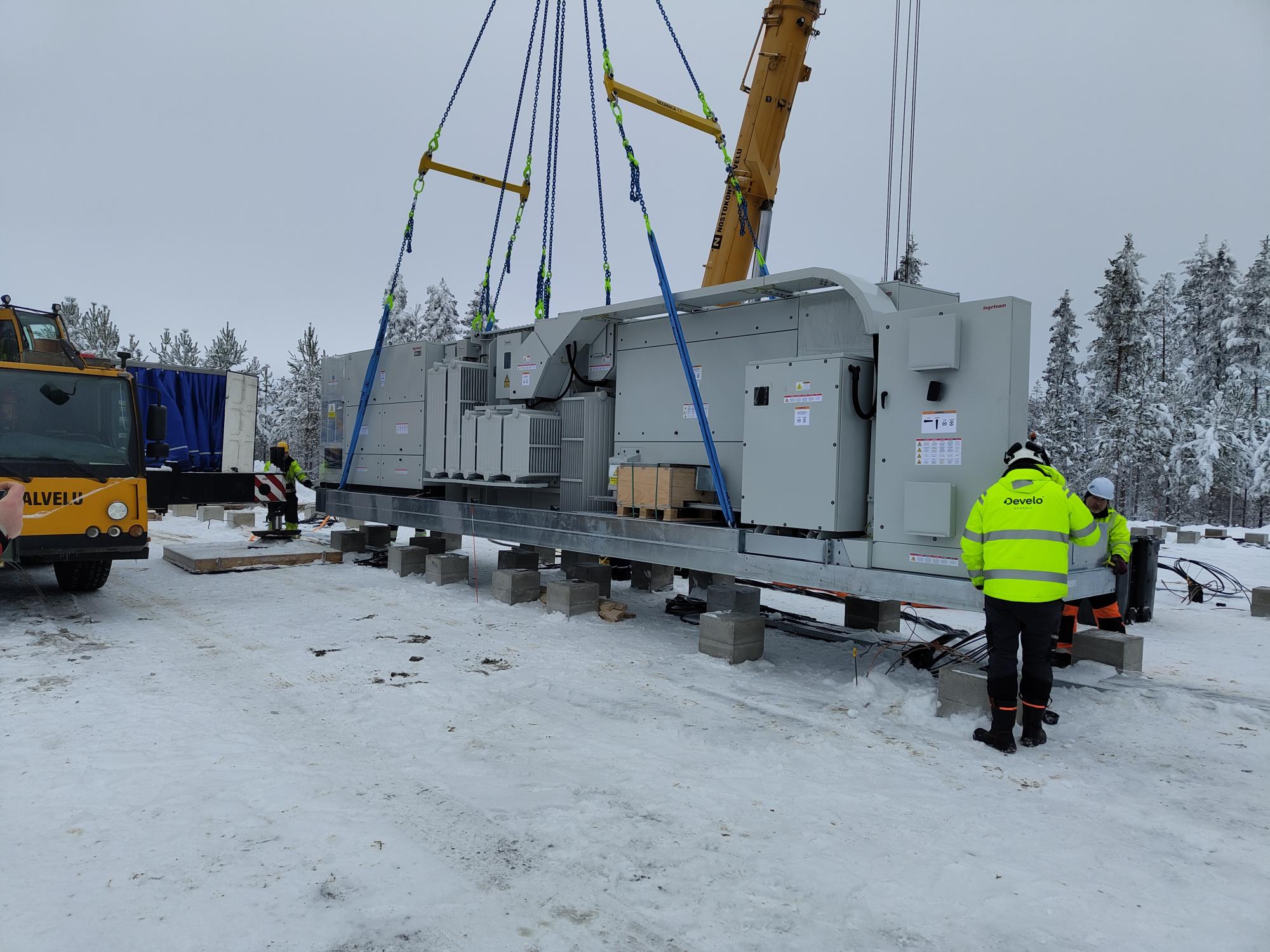
The actual positioning of the technology often takes several days. And the weather rarely chooses the ideal timing.
Photographs from installations in Finland, where commissioning took place at temperatures around −18 °C, almost look magical. However, when you realize that your suitcase full of warm clothes remained hundreds of kilometers away at the airport, the whole situation suddenly gains a very different dimension.
Spending 8 to 10 hours outdoors in such conditions is certainly far from comfortable. Nevertheless, the feeling of well-executed work, watching a fully functional energy system take shape before your eyes, and the surrounding fairytale-like landscape provide at least some warmth.
Cold and Hot Commissioning
Following the mechanical installation comes another key phase — the so-called Cold and Hot Commissioning.
Without exaggeration, the content of this phase alone could fill several technical manuals. In short, it mainly includes:
- inspection of all cabling,
- verification of correct wiring,
- electrical measurements,
- configuration of individual devices,
- parameterization of protection functions,
- setup of communication systems,
- testing of safety features,
- and verification of communication with electricity distributors.
From communication modules of individual battery packs to data connections with operators such as ČEZ, ČEPS, or their international equivalents — everything must function flawlessly.
In many respects, commissioning is all about attention to detail. Every signal, every data packet, every volt and ampere must be understood and verified. The same applies to every volt, ampere, and ohm throughout the entire system.
Every test must be successful:
- from fire protection systems,
- through safety logic,
- to remote communication with energy dispatch centers.
Only when all parts of the system operate as one integrated whole can the technology officially be handed over for operation.
But That Is Not the End
It might seem that once the system has been successfully started up, our work is finished. In reality, it simply moves into the next phase.
Large-scale battery energy storage systems are monitored and controlled continuously, 24/7.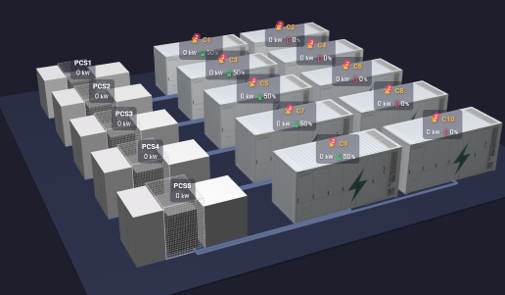
Every anomaly, abnormal condition, or service request triggers another chain of activities once again handled by people from our GAZ/Bochemie team.
And perhaps that is the most fascinating aspect of the entire field. A BESS is not a product that disappears from our world after shipment. It is a technology we take care of throughout its entire lifecycle.
From the very first tightened bolt during production to the megawatts of energy flowing into the grid hundreds or even thousands of kilometers away.


